“I Just Told You”: The Ability to See Your Family’s History

by Burnell K. Irby

The house on T Street in Washington, D.C. was the center of family life for many years. Bought by my great-grandmother and her husband, it was a stopping place for family coming from New York and going to Virginia, and a destination for family coming to visit or needing a place to rest while traveling north.

In 1905 my great-grandmother came to Washington, D.C., from Virginia to live with her eldest sister. Their house was three blocks away from the one on T Street. My great-grandmother would live there until she was able to buy her own home.

The house on T Street was purchased about 1922. The woman who owned the house would not allow my great-grandmother to come inside. She had to view another house with a similar layout up the street. When she purchased the house, she paid $2000.00 for it. My great-grandmother put in hardwood flooring, French doors, and wallpaper.  She lived there until her passing in 1977.

Family members continue to live there.

My mother has told me many stories about growing up on T Street in Washington, D.C. In one story, she is walking to the Safeway with her mother. On the way, they would pass a former nightclub at the corner of 14th and T Streets. In those days, it was also a gathering spot for the locals. She was not allowed to walk that way alone.

One evening while walking past the club, her mother stopped and spoke with a blind man holding a cup and a cane. They talked for several minutes. When the conversation was over, they continued on their way to the grocery store. My mother was perplexed about who her mother would know on that corner and asked, “Who was that”? “That is your cousin from Williamsburg,” she was told. My mother could hardly believe that her mother had stopped to talk to anyone, and was even more astounded that he was a relative.

Making contact, keeping lines of communication open, and passing the family story on were characteristics of my grandmother. By the time they got home, my mother knew just whose child he was and who his people were.

I have been told that this was typical of my grandmother.  If she was not taking pictures, she was visiting not only her family, but my grandfather’s family also. She hosted family cookouts on the 4th of July during the summer in Virginia, providing us with  a wonderful picture of family and neighbors.

The house was a brick “row house” with four levels.  While they were growing up my mother says the children were rarely allowed in the living room; it was for holidays and company.  And don’t put your hands on the wall coming down the stairs.

It was from the house on T Street that my grandparents would organize their fight to get my deaf uncle educated in D.C. At the time, he was attending school in Philadelphia.

It would be from here that my great-grandmother would organize the family’s response to the family farm being taken in Magruder, Virginia.

The house in Grove was acquired in James City County in 1943, after the community was evicted from York County to build Camp Peary. It was a 2-bedroom bungalow, with a wood stove and no running water. Every generation of our family has spent summers in Grove staying in the house on Magruder Avenue.

It has enabled family living in Washington to stay connected to family in Williamsburg, to attend family functions from reunions, weddings, funerals and birthday celebrations.

I would hear those and other stories, not realizing the family history behind the stories she was passing on. As I grew older, those places, stories, pictures, and artifacts began to make sense. When a memory was triggered, my mother would share the how, when, and where of its place in family lore. I would say to her, “You need to write it down”—and her response was always, “I just told you.”

Objects I had grown up with and used in my great-grandmother’s houses in D.C. and the Grove area of Williamsburg began to reveal themselves to me. An example of family artifacts coming to life would be two chairs. The story is that they were purchased about 1900 by my great-great-grandparents to celebrate the marriage of one of their daughters.  They were always in the house in Grove. They are another example of household furniture moving from one household to another: they are now in DC.  At 125 years old, I have taken them to school to share with my students. I asked them, “What have these chairs seen?”

Make every effort to support your family’s story with documents and dates. Then put them on a timeline with major events in United States history. What you will begin to see is how your family responded during these national events.

Where was your family during the Civil War? During World War I, the Great Depression, World War II? How did they fair during the Civil Rights Movement?

It gives a broader context and meaning to your family’s journey.

Be patient, this will take time. Some leads will prove to be false; double check names. Names will also be repeated. You will have to visit libraries, historical societies, and museums.

Start with one notebook. There will be more.

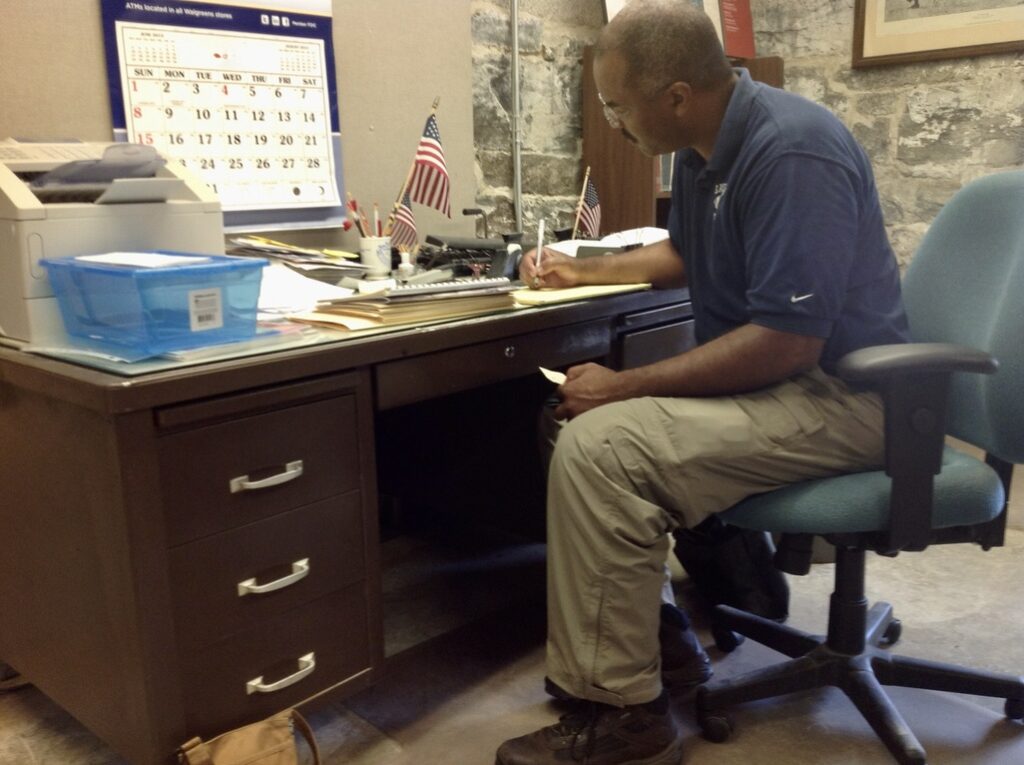
Photo: Burnell Irby

A Descendant Community member, Burnell K. Irby is a Howard University graduate, and an educator in Washington, D.C., and Maryland. As a youth, he spent his summers in Williamsburg at his great-grandmother’s house in Grove.


Learning from the Ancestors, the Elders, and the Next Generation

By Nicole Brown

A central part of my career in the last four academic years was my role as Graduate Assistant for the William & Mary Bray School Lab. I have worked on a variety of student-driven digital projects, overseen the review of Williamsburg and Fredericksburg Bray School transcriptions, assisted with general research, and collaborated on descendant engagement. Most often, I served as both a mentor and guide for undergraduates conducting primary-source research associated with the Williamsburg Bray School, the Associates of Dr. Bray, or eighteenth-century Black education in the British Empire. As I move into the next stage of my doctoral studies within the American Studies graduate program at William & Mary, I must transition away from the Bray School Lab and onto other new and exciting projects.

There is something truly special about working on new scholarship with students, descendants, and scholars alike. The collaborations generated via William & Mary’s Office of Strategic Cultural Partnerships are exceptional in the academic world. One such example includes The Williamsburg Bray School: A History Through Records, Reflections, and Rediscovery (The Colonial Williamsburg Foundation, 2024), the book I had the privilege to co-edit alongside Bray School Lab Director Maureen Elgersman Lee. Despite my heartache at leaving my position, there is also much to be thankful for. Chief among those thanks includes the lessons I learned from collaborating and counseling undergraduate students, as well as learning from the many descendants who have shared their knowledge, passion, and insight.  

Learning from the Ancestors and the Elders

“Remember the ancestors” is an adage I hear often repeated by the men and women far wiser than me. The descendants of Bray School students and those whose families (enslaved and free) lived and labored in Williamsburg from the seventeenth century onward always remind me to carry this phrase with me, wherever I go. Collaborating with descendants has taught me that shared authority is not only important, but essential to understanding our past. When museums, universities, and other similar institutions value their own thoughts and ideas about history over the ones shared by descendants, massive swaths of our history are lost – or outright ignored.

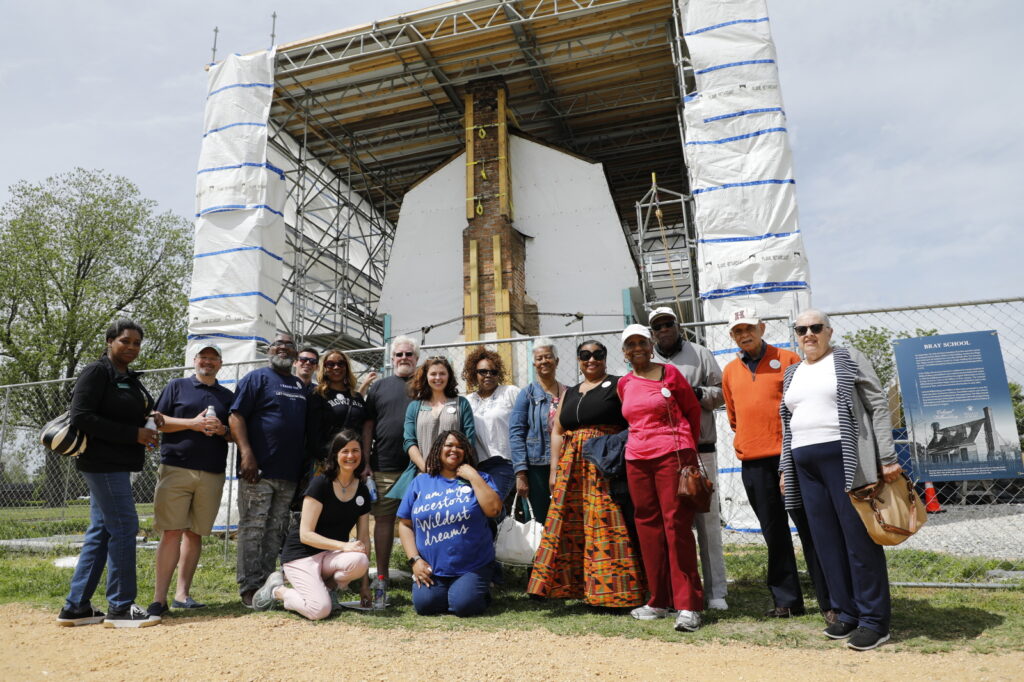
W&M Bray School Lab staff, Descendant Community members, and friends, standing outside the Williamsburg Bray School building, Descendants Week 2022.
W&M Bray School Lab staff, Descendant Community members, and friends, standing outside the Williamsburg Bray School building, Descendants Week 2023. Photo by Grace Helmick, W&M Strategic Cultural Partnerships.

Over the years, I have learned that remembering ancestors is not just saying an individual’s name – you must also share how these individuals shaped the world we live in today. Share this knowledge loudly and often, even in spaces where people might prefer you to be silent. I am forever grateful to the many descendants who have taught me that I am part of the collective to remember their ancestors. Their willingness to teach me has foundationally shaped both my PhD dissertation and my life.

Learning from the Next Generation

 One of the best things about working with undergraduates is their unique way of looking at history—especially eighteenth-century history. Early American history often feels static and removed from lived experience. When an event – such as the closing of the Williamsburg Bray School – occurred more than 250 years ago, it can feel impersonal to your daily life. However, undergraduates often have the most innovative perspectives on studying the past because they are willing to grow and learn while studying it, rather than assuming they know everything there is to be derived from eighteenth-century documents, narratives, and events.

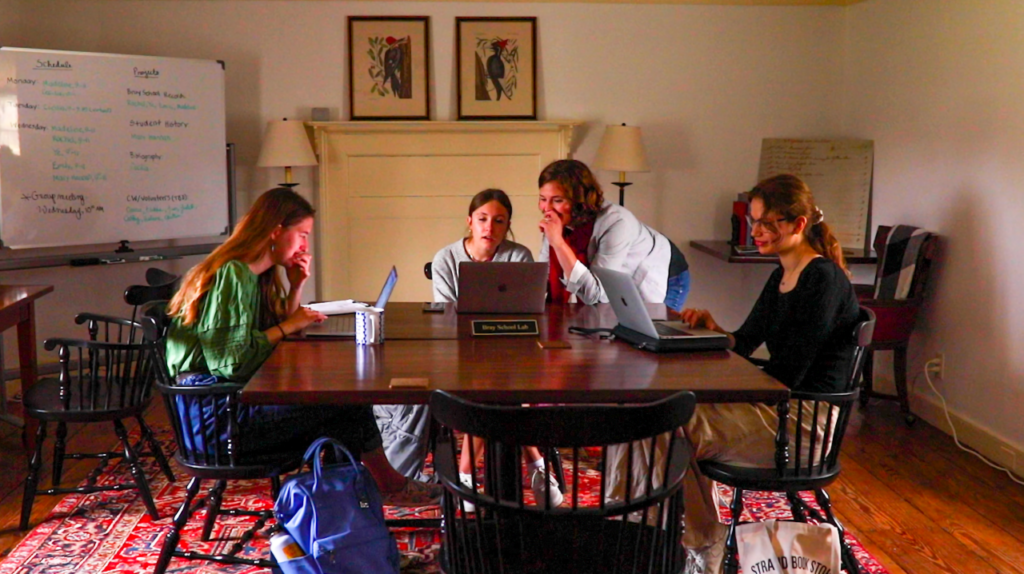
Nicole Brown working with early student thought partners in the W&M Bray School Lab.
Nicole Brown, standing, works with student thought partners in the early days of the W&M Bray School Lab. Photo by Grace Helmick, W&M Office of Strategic Cultural Partnerships.

One student’s detailed analysis of the 1762 Bray School regulations made me consider this source in new ways. The absence and presence of students in this record became apparent to me through her. Another undergraduate’s ability to consider how hand sewing skills might have influenced the experiences of young Black girls at the Williamsburg Bray School has fundamentally changed the way I write about them. Thanks to her, I take every opportunity to mention what kinds of sewing skills may have been taught at the Bray School. A more recent W&M student shared her unique perspective on walking through a city that has a multilayered past and present. Her ideas reshaped how I conceptualize children walking through eighteenth-century Williamsburg. I cannot walk by the Bray School building without thinking about this student and the quiet wisdom she carries with her on topics such as religion, memory, and history.

What Have I Learned?

Each student I have had the pleasure of studying with in the last four years has taught me valuable lessons. While I have mentored students on how to read eighteenth-century handwriting, contextualize colonial newspapers, or explore the microhistories of Virginia’s colonial capital, they have also taught me how to think anew about the past. To each one of these students, I say: thank you. I am humbled by working with you and working alongside you. If you are any indication of how the next generation of historians will study the past, we are all in excellent company.

Similarly, the descendants who have sat me down to discuss family history, challenge my conception of the America’s founding, or reiterate that I should keep pursuing my research, have reminded me that my passion to study the Williamsburg Bray School is a lifelong journey that cannot be confined by any title or position I may hold. To them I say: thank you. I have learned what resilience truly means from your guidance and love. I promise to honor you, and your ancestors, in my next steps.

The hundreds of hours I have spent working with these teachers, young and old, give me hope for the future. They also remind me that there is always something to be learned from anyone you meet. While ancestors and elders often hold keys to wisdom, so, too, does the next generation. I am excited to hand them the keys; they will unlock doors that neither I nor my contemporaries even thought to open.

Nicole Brown is a PhD candidate in the American Studies Program at William & Mary and a renowned scholar of the history of the Associates of Dr. Bray and of Bray schools in North America. She has served as the William & Mary Bray School Lab Graduate Assistant since the Lab was launched in 2021.