by Maureen Elgersman Lee
When I joined the staff of William & Mary in early 2021 as Mellon Engagement Coordinator for African American Heritage, I could not have imagined that by year’s end I would also be serving as Director of the W&M Bray School Lab. Shaping and supporting the Lab’s mission in all its dimensions has been a great privilege, a profound responsibility, and a once-in-a-career opportunity that I have never taken lightly. As director, my work has been intense, requiring me to “look down” at the details and tasks at hand, while simultaneously challenging me to “look up” at the bigger picture and context.
Goal setting is an important part of starting any new position, so I wanted to be thoughtful in imagining what new goals to set for myself as director and for the Lab more broadly. Having joined W&M at the end of the successful For the Bold campaign, the culture of Strategic Cultural Partnerships was one that encouraged me to be a blue-sky thinker who focused on creative possibilities rather than practical constraints. That is not easy for someone who needs to know the details of how things will work before getting started. I was also encouraged to embrace another important lesson: sometimes you have to build the car while you are driving it. That metaphor and attendant mindset freed me from having to know exactly how a project would come together as long as I knew what the goal was and why it was important. This also freed me to think much more expansively and collaboratively.
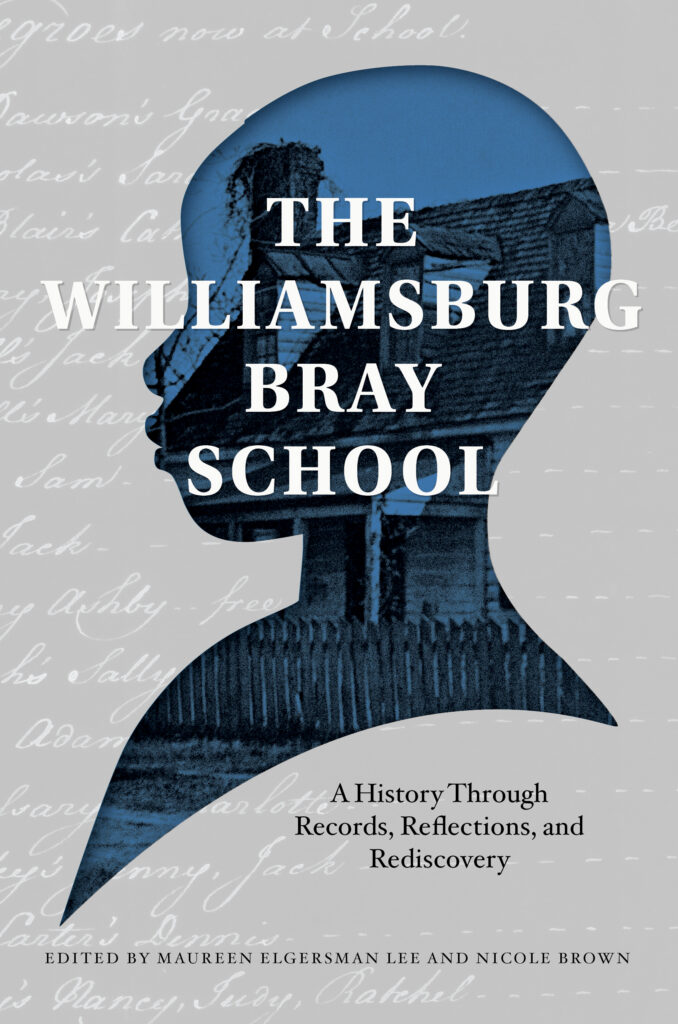
So, two big, blue-sky ideas were 1) publishing a new book on the Bray School, and 2) convening a mapping project. I did not know what either project would look like before I set the goals, but I knew that they were deeply important to me. Fast forward to now. It is early summer 2026, and The Williamsburg Bray School: A History Through Records, Reflections, and Rediscovery, coedited with Nicole Brown and published by the Colonial Williamsburg Foundation in late 2024, has been in print for a solid year and a half. Last year, the multifaceted project to convene a community of more than thirty contributors—representing the Descendant Community, William & Mary, and the Colonial Williamsburg Foundation—won an Award of Excellence for Special Projects by the American Association for State and Local History (AASLH). This came on the heels of receiving the Outstanding Education Institution award from Coming to the Table that January. More important than the recognitions, we celebrated having been able to build and strengthen community across geographies, positions, and time. There were definitely heartfelt moments along this journey as blue sky became reality.
Once The Williamsburg Bray School went to press, we were afforded the time and mental space to return to thinking about the mapping project. An initial summer 2024 information session with partners at Virginia museums and archives yielded interest and confirmed that the concept was sound. In addition to the Bray schools in Williamsburg and Fredericksburg, Virginia, historical research by Bray School Lab staff continued to point to other examples and sites of education for enslaved Virginians even when that was not the research focus. The mapping project’s runway was slow in Fall 2024, but since February 2025, a growing team of dedicated W&M students has been working diligently on gathering data for the project now named “Mapping the Literacy of Enslaved Virginians, 1619-1865.”
This project has benefited from the work of Sharpe Community Scholars, Cultural Heritage Immersion Program (CHIP) interns, and other valued student thought partners who have given selflessly of time and talent. The mapping project was not about speed, but, rather, about making measured, intentional progress in creating an inventory of primary-source evidence of literacy among enslaved Virginians from first documented African arrivals in 1619 through the end of the Civil War in 1865.
Most evidence has come from the digitized pages of newspapers like the Virginia Gazette, where enslavers advertised for the capture and return of African Americans who had escaped bondage in search of family, freedom, or both. Other sources include narratives from formerly enslaved persons, themselves, in 19th-century Canada or the 20th-century United States.
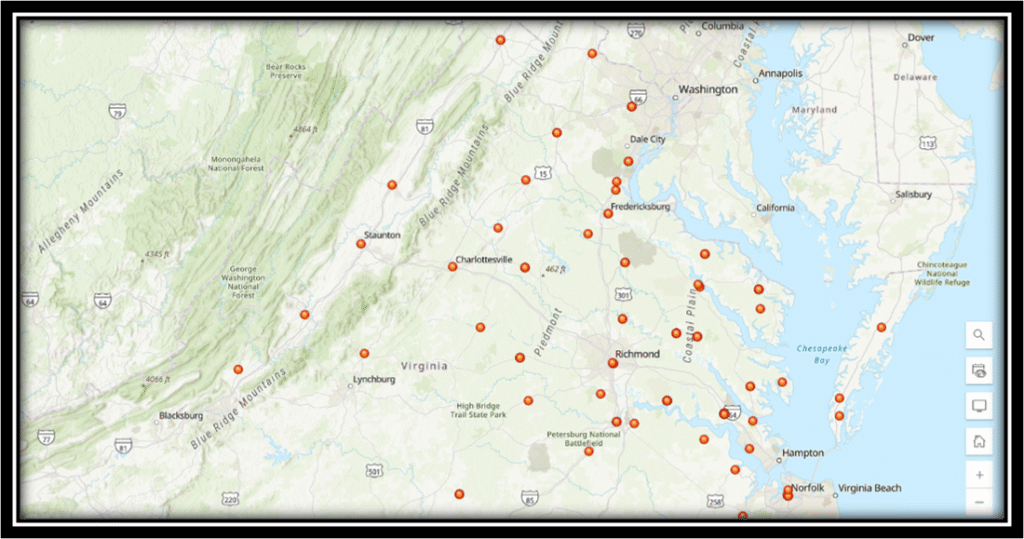
Now at home in Swem Library and with thanks to our partner-mentors at W&M’s Center for Geospatial Analysis, we have been able to clean up our spreadsheet data and translate it into a public facing, but still evolving, ARCGIS map. Meetings with Shannon White and her team helped make the dark places light and the rough places smooth. Being able to feature the mapping project’s vision and progress on June’s installment of Bray School Stories, is another blue-sky moment rooted in partnership and progress. The project is a milestone that exhibits something I learned from President Katherine Rowe rather early: we are pursuing “excellence, not perfection.”
The W&M Bray School Lab has trodden an incredible path in a relatively short period of time. Certainly, genealogy research will continue to be one of its greatest capacities, with Bray School Stories as one of its brightest shining lights. Saying the names of known Bray School students and their families while searching the records for more child scholars extends the privilege, responsibility, and opportunity born in the Lab five years ago.
Blue-sky thinking remains central to the Lab’s ethos as it continues to curate research-driven projects and authentic, meaningful events.
The work continues.
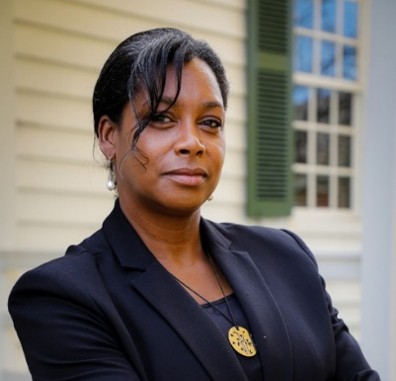
Maureen Elgersman Lee has served as Mellon Engagement Coordinator for African American Heritage (2021-2024) and Director of the W&M Bray School Lab (2021-2026). In both roles, she championed history’s power to bridge the past and the present as well as its potential for connecting people across communities. She has authored/edited five books to date and is scanning the landscape for her next blue-sky project.
Great job Maureen and staff at BSL in telling a story that needs to be told! The work continues!!!
First off I would like to say excellent blog! I had a quick question in which
I’d like to ask if you don’t mind. I was interested to find out
how you center yourself and clear your thoughts before writing.
I have had a tough time clearing my mind in getting my ideas out there.
I do enjoy writing but it just seems like the first 10 to
15 minutes are lost simply just trying to figure out how to begin.
Any ideas or tips? Thank you!
Think about the story (fiction or nonfiction) that you want to tell and try to find your “in.” Your “in” is the little picture you draw with words that invites your reader into that story. And then just start writing and don’t get too caught up in grammar, structure, order of thoughts. Just simply start putting words down. It’s all part of the writing process.